When FromSoftware announced that Elden Ring Nightreign would be a "roguelike," I will admit I was skeptical. The deliberate, hand-crafted exploration of the Lands Between does not seem like it would survive randomization. But after spending roughly 30 hours across dozens of expeditions, I can say this: the roguelike structure is the best thing that could have happened to this formula. It transforms Elden Ring from a sprawling epic you play once into a tight, replayable loop you come back to every night.
But the game does a poor job of explaining exactly how the roguelike systems work. What carries over? What resets? How long is a run? What is the difference between a relic and a rune? Let me break it all down, drawing comparisons to classic roguelike design along the way.
What Is an Expedition? The Core Run Structure
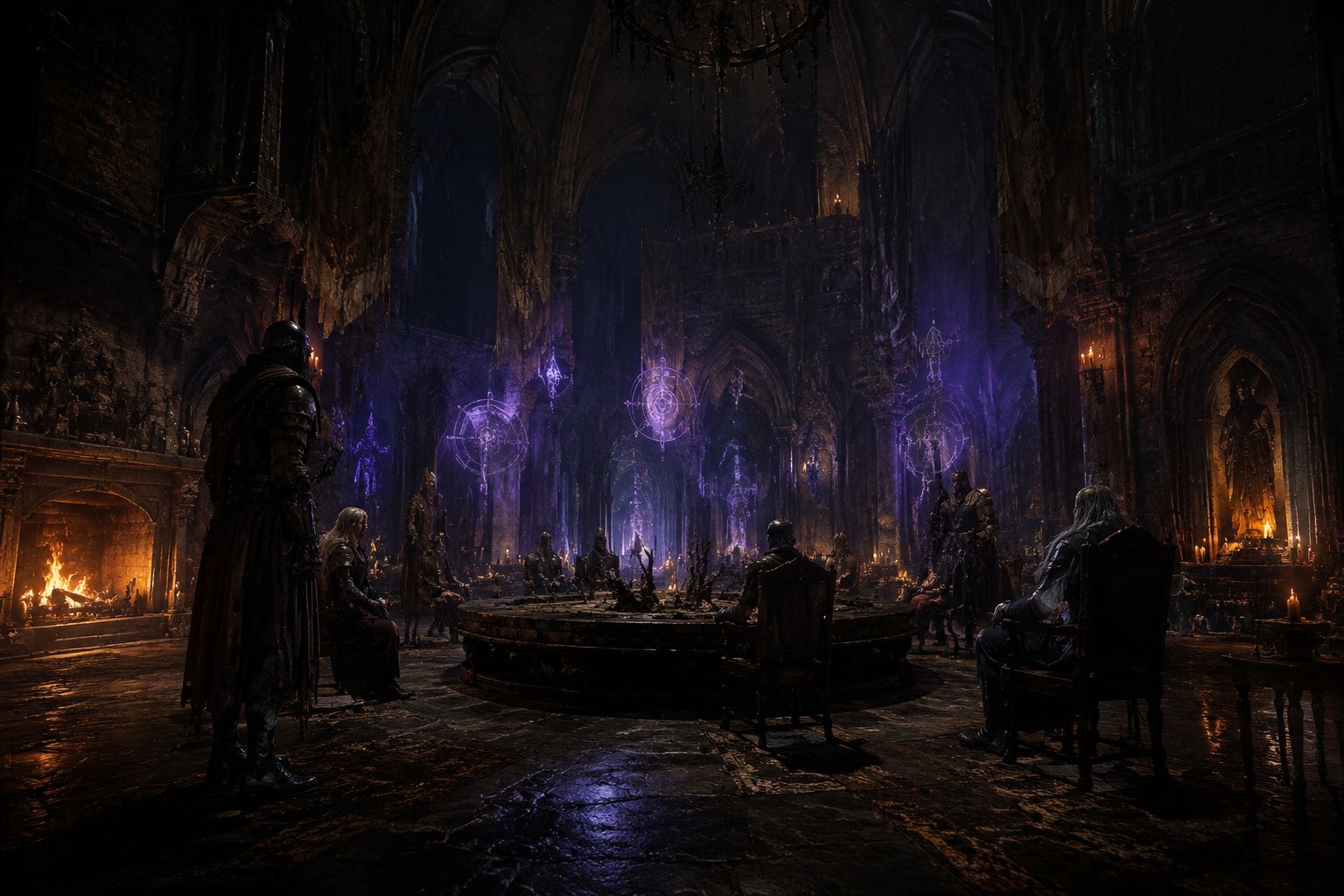
In roguelike terms, an "expedition" is a single run. It starts when you enter the Liminal Gate from the Roundtable Hub and ends when either your entire party is defeated or you defeat the Night Lord. Here is the anatomy of an expedition:
Three Day Cycles, Three Night Bosses. Each day lasts approximately 15 minutes (real time). During the day, you explore, loot, fight minor enemies, and upgrade your gear. When night falls, a boss spawns in the zone. Survive the boss, and you advance to the next day with access to a larger portion of the map. Die to the boss, and the expedition ends.
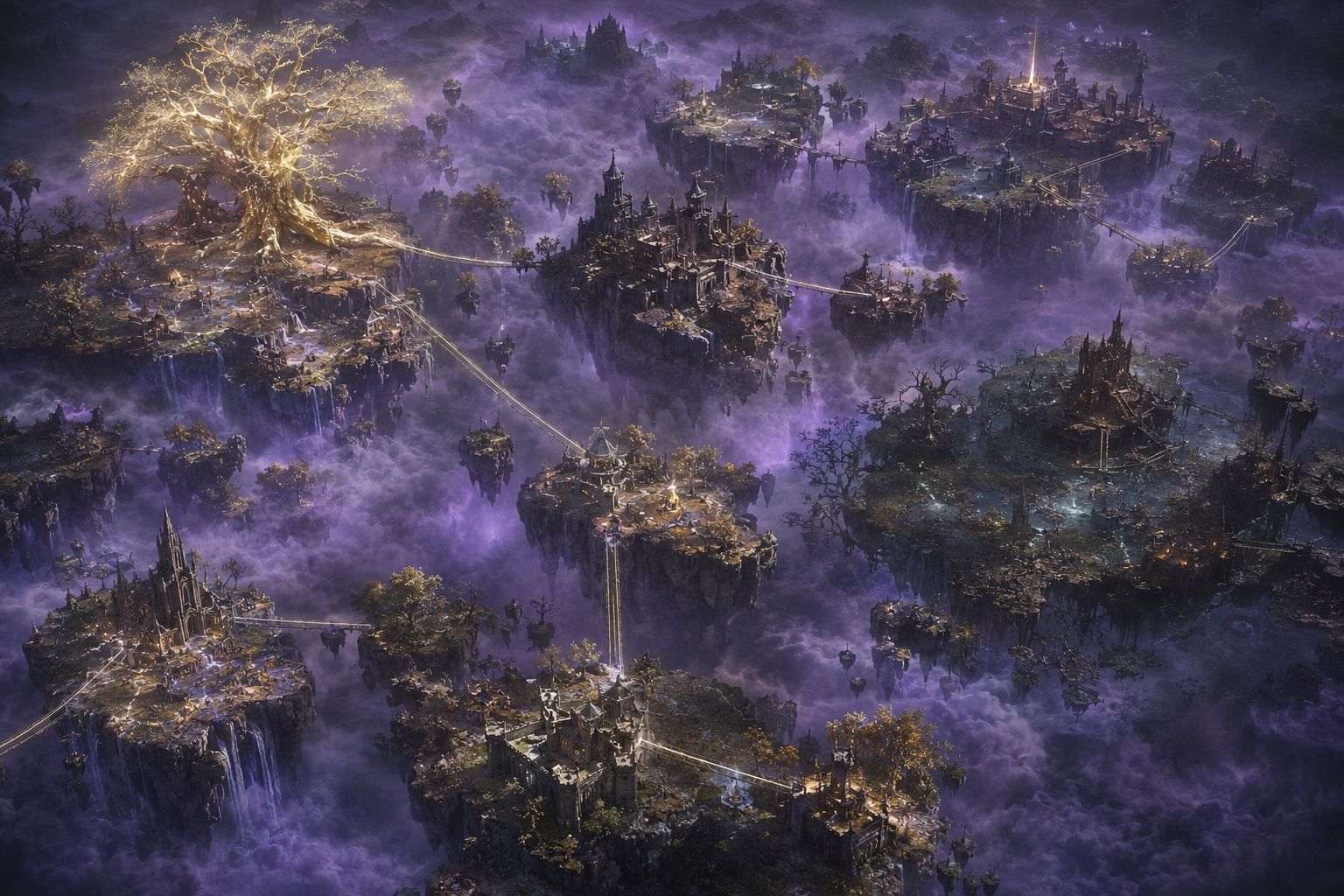
Randomized Everything. The zone you drop into is randomly selected from a pool of about eight hand-crafted biomes. Enemy placements, loot locations, chest contents, and even the roaming field boss spawns are randomized each run. The Night Lord itself is pulled from a pool of five different bosses, each with unique mechanics and resistances.
Single-Session Commitment. Expeditions are designed to be completed in one sitting. There is no save-and-quit mid-run. If you disconnect, the run is forfeited. This is standard roguelike design, but it is worth emphasizing if you are used to the base game's "pause and save anywhere" approach.
"The first time I saw the Night Lord's fog wall shrink the arena, I panicked. I was not ready. My weapon was +5 and I had two flask charges left. We lasted 43 seconds in phase two. Next run, I made sure I was +9 with six charges. That is the loop — you learn, you adapt, you come back stronger."
What Resets Every Run (Roguelike Rules)
This is the most common source of confusion for new players. Here is the complete list of everything that resets when an expedition ends — whether you win or lose:
- Character Level: Your Rune level resets to 1 at the start of every expedition. You level up during the run using runes you find in the world, and those levels disappear when the run ends.
- All Gear: Weapons, armor, talismans, and consumables found during the expedition are lost on death or expedition clear. You start every run with your class's default equipment.
- Flask Upgrades: Any Golden Seed or Sacred Tear equivalents you find during a run apply only to that run. New expedition, new flasks.
- Map Progress: The fog of war resets. You have to explore and uncover the map fresh each time.
- Weapon Upgrades: Smithing Stone upgrades are per-run. A +10 weapon in one expedition does not carry to the next.
- Remembrances and Boss Rewards: These are consumed at the end of the run. Spend them during the expedition at designated altars.
If you disconnect mid-expedition, you lose everything from that run. The game does not checkpoint progress within a run. Treat every expedition as a single-session commitment. The average run is 30-45 minutes — block that time before you queue.
What Carries Over (Meta-Progression)
Here is where the "roguelite" part kicks in. True roguelikes (Nethack, DCSS) reset everything on death. Roguelites (Hades, Returnal, Nightreign) give you permanent upgrades that make future runs easier. This is what carries over in Nightreign:
Relics
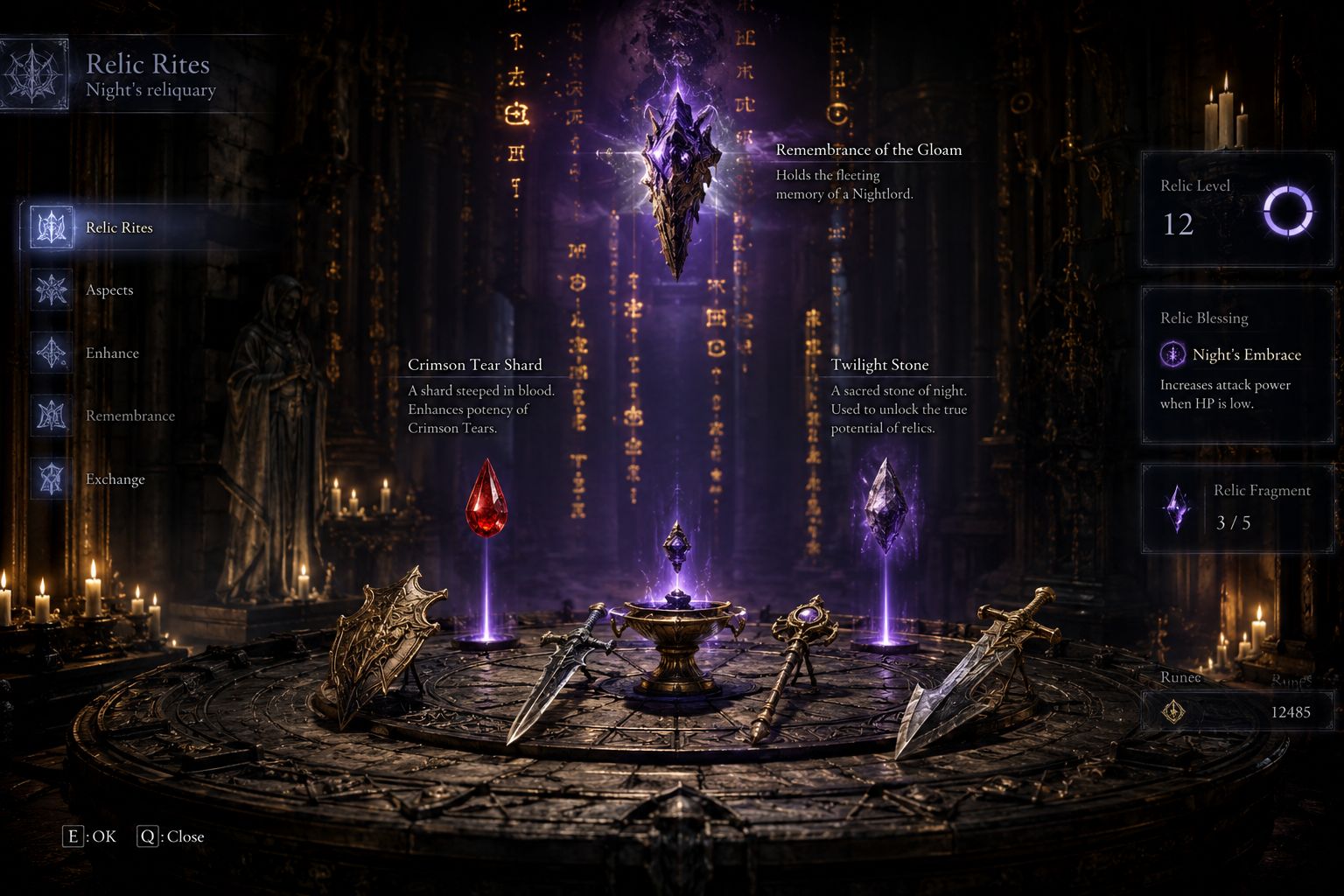
Relics are permanent stat upgrades that you slot into your account-wide relic grid. Each relic provides a passive bonus (e.g., +40 HP, +12% stamina regen, +8% elemental defense). You earn relics by defeating field bosses and Night Lords. They never go away. You can reslot them between runs for free. This is your primary long-term progression system.
Class Levels
Each of the four classes has ten account-wide levels. You earn class XP by completing expedition milestones (surviving a night cycle, defeating a field boss, clearing the expedition). Class levels unlock starting gear upgrades, bonus flask charges, and passive bonuses that apply from the very first second of a new expedition. A level 10 Wylder starts with noticeably better gear than a level 1 Wylder.
Hub Upgrades
The Roundtable Hub has upgrade stations that cost Rune Arcs (a special currency earned from boss kills and expedition completion). These upgrades include: increased relic capacity, access to higher-tier loot pools, bonus starting runes, and the ability to reroll one chest per expedition. These are permanent account-wide upgrades.
Unlocked Weapon Arts
Finding and using a weapon art during an expedition permanently unlocks it for your account. You can then select it as your starting weapon art before future expeditions. This encourages experimentation — try that weird weapon art you found, because even if you die, you keep the knowledge.
Focus on buying Roundtable Hub upgrades first with your Rune Arcs. Relic capacity is the single most impactful permanent upgrade because it allows you to stack more stat bonuses from the relics you earn. Prioritize the "Relic Grid Expansion" upgrades before spending on anything else.
The Relic System: Nightreign's Permanent Power
Relics are the heart of Nightreign's meta-progression. Think of them as Hades' Mirror of Night talents, but with more granularity. Here is how the system works:
Earning Relics: Every boss kill drops at least one relic. Night 1 field bosses drop Common relics, Night 2 bosses drop Uncommon, and the Night Lord drops Rare or Epic relics. You can also find relic fragments in high-risk loot vaults scattered around the map.
The Relic Grid: You have a grid that starts with four slots and expands as you upgrade the Roundtable Hub. Each relic occupies one slot. At maximum hub upgrade, you have ten slots. Relics come in five tiers: Common (grey), Uncommon (green), Rare (blue), Epic (purple), and Legendary (gold). Higher-tier relics have stronger effects and sometimes dual effects (e.g., "+40 HP and +6% fire resistance").
Relic Loadouts: You can save up to three relic loadouts and switch between them for free before an expedition. I recommend one defensive loadout (HP, stamina, elemental defense), one offensive loadout (attack power, critical damage, FP), and one balanced loadout for solo runs.
| Relic Type | Common Effect | Rare Effect | Best Used For |
|---|---|---|---|
| Crimson Shard | +40 HP | +80 HP + 3% heal on kill | First expedition survival |
| Viridian Shard | +12% stamina regen | +20% stamina regen + 5% max stamina | Boss endurance fights |
| Crumbling Moon | +8% elemental defense | +15% elemental defense + 5% magic damage | Magic-heavy Night Lords |
| Ancestral Shard | +6% physical damage | +12% physical + 3% crit chance | Strength builds |
| Athletic Weave | +5% movement speed | +8% movement + 3% dodge distance | Hit-and-run tactics |
Run 1: Died on Night 1 field boss. Earned one Common Crimson Shard (+40 HP). Run 2: Died on Night 2 boss. Earned one Common Viridian Shard and one Uncommon Crumbling Moon Shard. Run 3 (with 3 relics equipped): Reached the Night Lord but died in phase two. Earned a Rare Ancestral Shard. Run 4 (4 relics, Hub upgrade unlocked second relic row): Cleared the expedition. Each run was easier than the last because the relics stacked. That is the intended loop.
How Class Levels Change the Game
Each class has ten levels, and leveling a class permanently improves its starting equipment and stats. Here is what you get at each milestone:
- Level 2: +1 starting flask charge (from 2 to 3). This is the single biggest power spike for early expeditions.
- Level 4: Unlock the class's unique starting weapon art. Wylder gets "Stance Break Slash," Drixter gets "Arcane Volley," Recluse gets "Blessed Cleansing," Duchess gets "Shadowstep."
- Level 6: +10% class-specific damage (Wylder: physical, Drixter: magic, Recluse: holy, Duchess: critical).
- Level 8: Starting armor upgrades from basic to reinforced (+15% defense).
- Level 10: Unlock the class's Legendary starting weapon — a unique weapon with a special skill that cannot be found anywhere else in the game.
Class XP is shared between all classes in a limited pool. You earn a flat amount per expedition milestone, and leveling one class to 10 takes roughly 25 to 30 successful expeditions. I recommend focusing on one class (Wylder for beginners) before branching out.
Why Focus One Class
- Reach level 10 faster for the Legendary weapon
- Master one playstyle before diversifying
- Higher level = more consistent early runs
- Level 10 Wylder starts with +2 extra flask charges
Why Spread XP
- Different classes handle different Night Lords better
- Keeps gameplay fresh across many runs
- You might find a weapon art that works better on another class
- Drixter's level 4 skill trivializes certain field bosses
Rune Arcs and the Roundtable Upgrade Priority
Rune Arcs are the premium currency in Nightreign's meta-game. You earn them from first-time boss kills, expedition completions, and as login bonuses from the Roundtable Board. They are used for permanent Hub upgrades. Here is what you should prioritize:
- Relic Grid Expansion (15 Rune Arcs per slot): Start with 4 slots, can expand to 10. Each new slot is a permanent power increase. This is the highest-ROI upgrade in the game.
- Loot Pool Upgrades (10 Rune Arcs each): Increases the chance of finding Rare and Epic loot in chests. Affects every expedition going forward. Worth buying after you have 6 relic slots.
- Starting Rune Bonus (8 Rune Arcs): Grants 2,000 bonus runes at expedition start. Nice for rushing level 10 in the first day cycle, but not essential.
- Chest Reroll (12 Rune Arcs): Lets you reroll one chest per expedition. Situational — skip until you have the other upgrades.
- Hub Cosmetic Upgrades (5-20 Rune Arcs): Purely cosmetic banners, lighting, and Roundtable decorations. Only buy these after you have maxed your relic grid.
"I wasted my first 30 Rune Arcs on cosmetic banners because I thought they did something. They do not. Save every Arc you earn until you have at least 6 relic slots unlocked. The difference between 4 slots and 6 slots is the difference between dying on Night 2 and reaching the Night Lord."
Frequently Asked Questions
What is a "run" in Elden Ring Nightreign?
A run, officially called an expedition, is a complete play session consisting of three day-night cycles (each about 15 minutes) culminating in a final boss called the Night Lord. Each expedition features randomized loot, enemy placements, and boss encounters. A full run takes 30 to 45 minutes.
What carries over between expeditions?
Relics (permanent stat bonuses), account-wide class levels, unlocked weapon arts, and Roundtable Hub upgrades carry over permanently. Gear, character levels, flask upgrades, and map progress reset every expedition. This is what makes Nightreign a roguelite rather than a pure roguelike.
Is Nightreign a roguelike or a roguelite?
Nightreign is a roguelite. Pure roguelikes (like Nethack or DCSS) reset all progress on death. Roguelites like Nightreign, Hades, and Returnal feature permanent meta-progression — relics, class levels, and hub upgrades — that make subsequent runs progressively easier while still maintaining the tension of each individual run.
How does class progression work?
Each of the four classes (Wylder, Drixter, Recluse, Duchess) has 10 account-wide levels earned by completing expedition milestones. Class levels unlock new starting gear, additional flask charges, and passive bonuses that apply from the beginning of every expedition. A level 10 class starts noticeably stronger than a level 1 class.
Can I save mid-run?
No. Expeditions are designed as single-session experiences. There is no save-and-quit feature mid-run. If you disconnect or quit, the expedition is forfeited and you lose all run-specific progress. Always block 30 to 45 minutes before queueing for an expedition.
How Dying Feeds Into the Loop
The roguelike structure only works if failure feels productive. Nightreign nails this. Here is what happens when you die:
- You keep your relics. Every relic you earned during the expedition is yours permanently, even if you did not extract. The only exception is if you never equipped the relic — looted relics are auto-equipped to your stash on expedition end.
- You keep class XP. Milestones (surviving a night, killing a field boss) are tracked even if you die later. You get partial XP for each night you survive.
- You keep Rune Arcs earned during the run. Rune Arcs are added to your account total immediately on pickup, not on extraction.
- You keep unlocked weapon arts. If you tried a new weapon art during the run, it stays unlocked.
The only things truly lost on death are: the gear you found during that run, the levels you gained during that run, and the chance to beat that specific Night Lord. Everything that matters for long-term progression is preserved. This is textbook good roguelite design — death is a setback, not a reset.
The result is a game that respects your time while still delivering the tension that makes roguelikes compelling. Every decision matters during the run because you want to extract with as many relics as possible, but you never feel like a death erased your progress entirely. That balance is hard to strike, and Nightreign strikes it beautifully.
For more on this topic, check out our guide on Elden Ring Nightreign Solo vs Multiplayer: Which Mode Is Better? and our analysis of Elden Ring Nightreign Is Hard — How to Survive Your First Expedition.